Blur Store - The Best Gadget Store

Online shopping from the earth's biggest selection of gadget and just about anything else.

Enjoy your Watches

teks

teks

Thinking about doing a piece on vintage watches.

Some of the best deals available are vintage watches. If you are willing to overlook a scuff or scratch here and there and, maybe, put a few dollars into maintenance, some seriously good stuff can be had.

--
Sent from my Treo

Marathon Watch Review


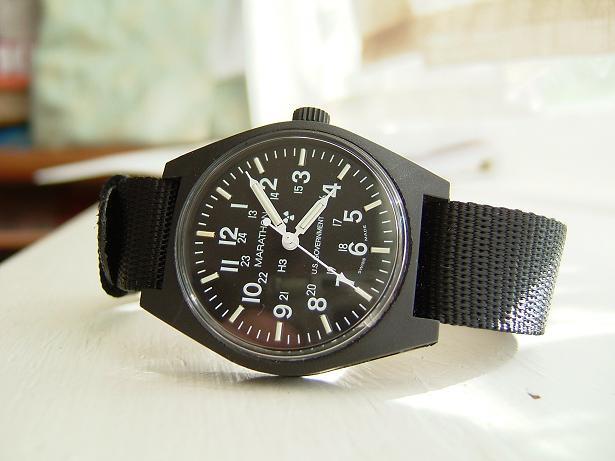
The subject of this review, the Marathon General Purpose Watch (talk about a generic name for a watch) is the first genuine military watch that I have owned. As it name implies it is manufactured by the Marathon Watch Company, a Canadian business that supplies watches to the U.S. and Canadian militaries and SAR (search and rescue) teams. It is my understanding that Marathon is currently the only official supplier of watches to the American armed forces. This particular model was made for the U.S. Army in March of 2005.

The watch itself doesn't look very impressive at first blush. It is a traditionally sized man's watch, which is to say rather small by today's standards. The watch measures 34mm in width (36mm if you include the crown) and comes stock with a 16mm wide nylon, one-piece band on fixed wire lugs. The case is made of some kind of supposedly durable plastic and uses an acrylic crystal. The watch is all black except for the markings on the dial, which also has the words U.S. Government and Swiss Made printed on it. In addition to its small size, the Marathon is also extremely light. If making a big visual impression with your watch is important to you, look elsewhere, this one isn't for you. Lastly, my model uses an ISA1198 Swiss quartz movement with an easily accessible, user replaceable battery.

The Marathon General Purpose does have a number of redeeming features, however, that make it one of my favorite watches of late. The watch's best feature is its lume. The Marathon uses tritium tubes (tiny glass tubes filled with gaseous tritium) on its hands and face to provide a steady bright glow that won't fade for over a dozen years. Unlike conventional glow in the dark technology, tritium lume watches do not need to be exposed to light to charge up the glow. In this respect the watch is like Luminox, Traser and Ball brand watches except that the Marathon is significantly less expensive than those brands. The lume, as those people who own tritium lume watches know, is simply terrific. In darkness and even low light conditions the watch is very easy to see and the glow does not fade over a few hours like a conventional, light charged lume system. For those of you who are concerned about exposure to radiation, the radiation output of the tritium tubes in the Marathon is very low. It is so low, in fact, that it is said that the radiation that the tritium emits cannot even penetrate the watch�s case or crystal. Unlike older watches with industrial radium lume (some of which were dangerously radioactive), there is apparently almost no possibility of exposure to dangerous radiation with tritium tube watches. The other feature of the Marathon that makes it a keeper to me is its ruggedness. The watch is built to meet a set of standards set by the armed forces (see also here) to ensure that it will continue to work under rough field conditions. It is thus unlikely that anything that I can throw at it in my day-to-day activities will cause any permanent damage. That makes wearing the Marathon a no-brainer in my opinion. It is the perfect beater. It is also the least expensive tritium lume watch that I have been able to find, other than closeouts on ebay. (It should be noted that when shopping for a watch with tritium lume, newer is always better. Tritium has a relatively short half-life as radioactive isotopes go, and the glow from a watch with this technology will last for only twelve to fifteen years. An older model, while probably less expensive than a new piece, will not work as well or as long.)

To sum up, if you are interested in a tritium lume watch, and don�t want to spend a lot, give this Marathon a long look. It isn�t pretty in any way but it is very light and comfortable and the sheer utility and ease of use that it provides make it the perfect choice for field wear or just general knock around. Add to that its military origin, which makes it historically interesting in my opinion, and you have a winner that you will want to wear for a long time.

Watch Band/Bracelet Combinations


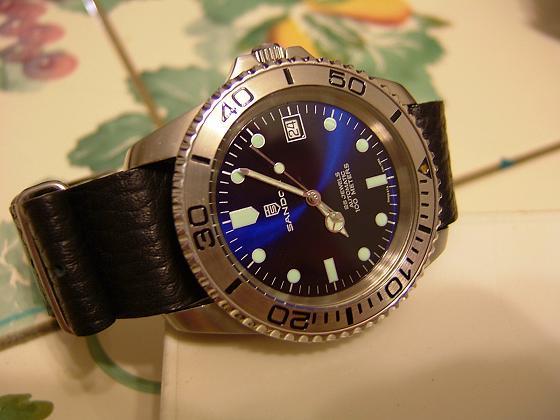
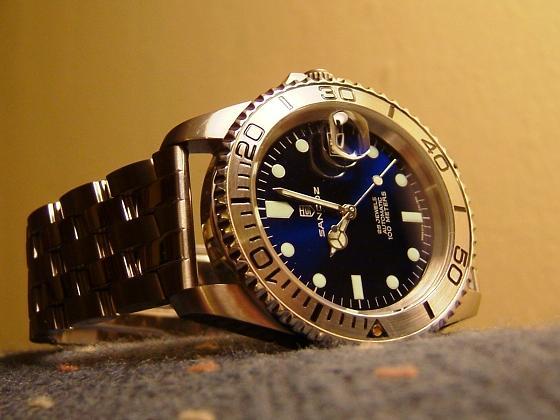
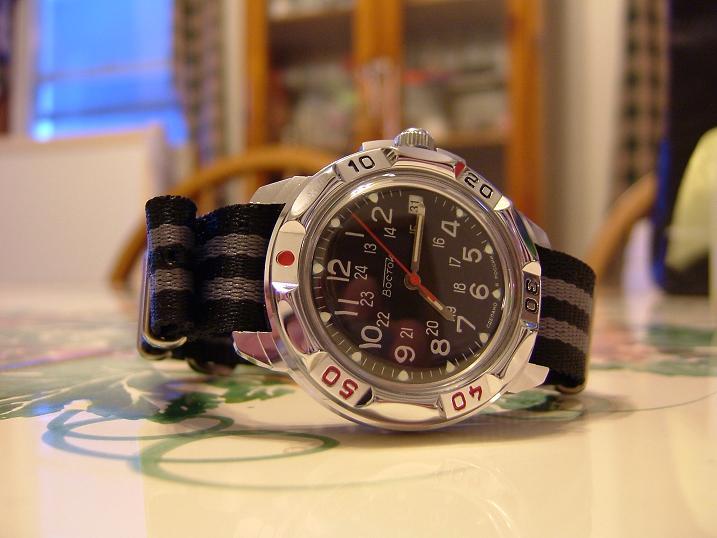
One of the easiest, and cheapest, ways to get the look of a new watch without actually buying one is to experiment with strap/bracelet combinations. I have been pleasantly surprised on many occasions by how good an old watch can look with just a strap change. Two prerequisites, you must get yourself a good spring bar tool (I recommend Bergeon but there are others. They generally cost $10 to $30. Otto Frei has an excellent selection.) and you should buy some spring bars in several sizes (they don't cost much at all, the Timezone Tool Shop sells 240 for $20) Once that is taken care of though, you can now change the look of your watches with very little effort.

There are many good sources for watchbands. One of my favorites is R M Nilsen�s ebay store. The Watchprince has a good selection as well. Look around, there are loads of other sellers.

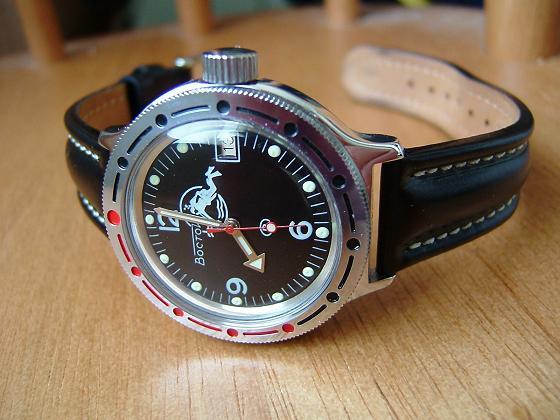
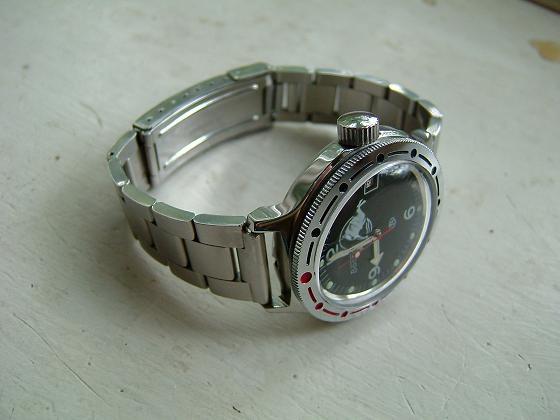
As the pictures above show, I hope, it is relatively easy to completely change the look of a watch with a new band/strap combo. If you have a watch that you haven't worn for a while, try a new watch band on it. I'm willing to bet that you will be surprised by the result.

I'm thinking about a review of watch band combos

Its really amazing how a simple change of a watch band can make an old watch look and feel completely different. I'll try to throw something together with the pictures that I have taken.

Poljot Shturmanskie Chronograph Review (And a brief section on the Poljot Gagarin)


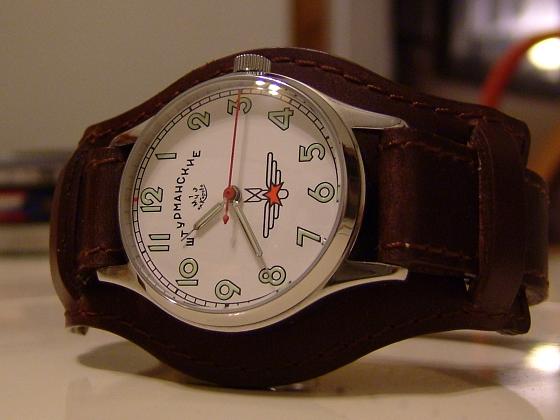
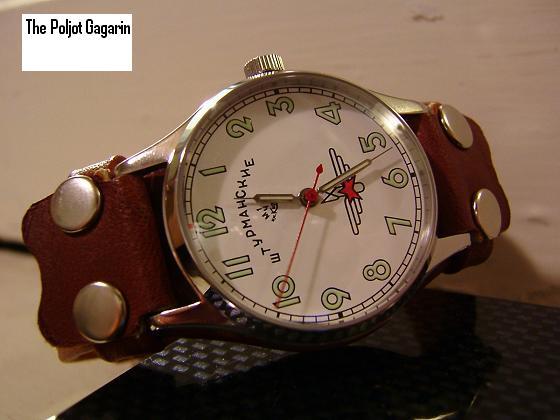
Shot of the Gagarin on an aftermarket Nilsen bund strap. I think it works well.
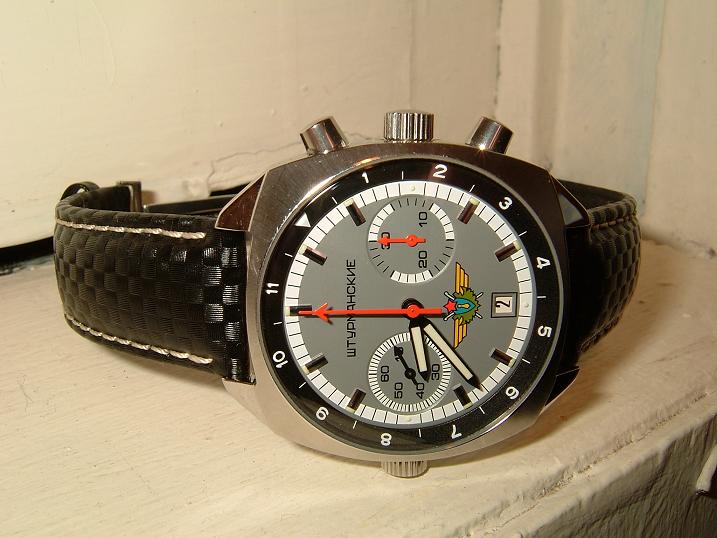


The subject of this review is my first mechanical chronograph, a Poljot Shturmanskie (Poljot Navigator in English). However, before I get to the review, the watch's maker, Poljot, merits some discussion. Poljot, also known as the First Moscow Watch Factory, has a fascinating history. Prior to the Russian revolution, watchmaking in Russia largely consisted of locally assembling foreign made watch parts. A number of watch brands were sold in Russia through this method including Bure, Mozer, Reinin and Dmitreiv see Aviator-Watch look under General Infos-History/Links. In the aftermath of the revolution, the newly created "Trust of Precision Mechanics" continued to make watches from the available stock of spare parts but when this supply of parts ran out, the Soviet government decided to create a domestic match industry. To affect this, they purchased the defunct Deuber-Hampton watch company from the American industrialist Armen Hammer see Klokwurx and NAWCC. The entire factory was apparently packed up and shipped to Moscow where it was reassembled and, with the help of a number of former employees of Deuber-Hampton, was gotten up and running over the course of a year or so. Four different watches were initially produced, a pocket watch, two men's wrist watches and a ladies wristwatch. (As an aside, I believe that the older models of the giant Zlatoust diver watches still use the movement from the first Russian made pocket watch. They still turn up on ebay from time to time although the newer units may be using a different movement.) The first Moscow Watch Factory produced these models until the war began when production was shifted over to military equipment. After the war, a number of new models were introduced including the Pobeda (meaning victory), the first Shturmanskie (pictured in this review as well and reputed to have been worn by Yuri Gagarin while flying Vostok 1 as the first man in space. Note-this claim has been questioned; some folks say that Gagarin wore a Rodina model. Irrespective, as he wore the watch under his flight suit, I'm not sure if anyone will ever really know for sure which claim is true.) (Update-an astute reader at the WatchUSeek Russian Watch forum clarified this matter for me. Gagarin was in fact wearing the Shturmanskie. It seems there was a photo of it at the time on his flight suit.), a mechanical chronograph called the Strela (meaning arrow) with a Venus based chronograph movement, an alarm wristwatch (the 2612 movement), a very thin mechanical movement called the Vympel, two rather rare models called the Sputnik and the Antarktida, the Sportivnie, the Rodina with the first Russian automatic movement, and, the model 3133 movement powered chronographs (the subject of this review being one). (This list should not be considered exhaustive; there were other models as well.) Poljot survived the breakup of the Soviet Union but the current status of the company is in question. The latest that I have heard is that Poljot itself is no longer in existence but that a sister company Volmax or Poljot-Volmax (I am not sure which of the two names it is), founded by Poljot employees and making watches with Poljot movements for the export market, is still functioning. There is also a company called Maktime that seems to have purchased some of the machine works from Poljot and is now producing watches with Poljot movements. Lastly, I have heard that the Poljot alarm movement, the 2612, will now be made by Vostok (another big Russian watch maker). It is hard to keep track of these developments; this sort of news isn�t widely reported. That being said, Poljot watches seem to be readily available on ebay and through a number of Internet based businesses.

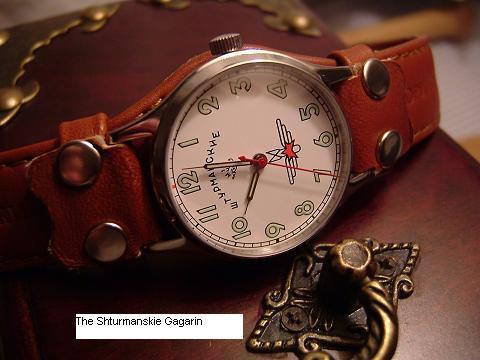
The Shturmanskie chronograph itself is a very nice watch. It has that heavy, solid feel of something that has been truly well assembled. The case measures 39mm in width (not including the crowns) and 14mm in height. The band lug width is 20mm. The watch uses a mineral glass crystal and is rated at 3atm water resistance. In a very pleasant surprise for a Russian watch, the lume is excellent, the hands and markers on the watch face easily remain visible for several hours after exposure to light. My particular model was purchased second hand from someone who owned it for only a few months but in that time he saw fit to replace the stock leather strap with an aftermarket model. As such, I cannot comment on the quality of the original strap. (However, I do own another Poljot watch, a Shturmanskie Gagarin, pictured above, and the leather strap that it shipped with is excellent. If the chronograph�s stock band was of similar quality that it would be just fine. That being said, Russian watch bands are a very iffy proposition, most seem to be dreadful. I have the chronograph on a Hadley-Roma 20mm pilot bracelet that, I think, looks and works quite nicely. FYI, got it
here.) The Shturmanskie is also a very handsome watch, with a striking appearance that doesn�t resemble many other watches.

The raison d�etre of a mechanical chronograph is its movement. The movement in the Poljot Shturmanskie is Poljot�s 23 jewel model
3133 and here for images. The 3133 is not an automatic movement and thus must be wound once a day. This movement has an interesting pedigree in that it is essentially a Russian made copy of a Swiss chronograph movement, specifically the Valjoux 7734 and here. It is my understanding that when Poljot bought the machine tools from the Swiss to make this movement, they changed the balance wheel and raised the frequency of the movement to improve its accuracy, but that some of the parts remain interchangeable. The chronograph function is started and stopped by pressing the button at two o�clock and reset after stopping by pressing the button at four o�clock. It is apparently considered important with this movement to be sure to stop the chronograph function before resetting the watch. The chronograph face itself (the dial at three o�clock) will accurately measure thirty minutes of elapsed time. The dial at nine o�clock, by the way, is an ordinary second hand. The crown at 9 o'clock adjusts the inner bezel ring, not the movement. The accuracy of the 3133 is rated by Poljot at -20 to +40 seconds per day, not bad at all. My example is running at a very fine +5 seconds.

Mechanical chronographs are something of a rare breed among watches. As a general rule they are quite expensive and must be treated carefully. (By the way, after a long search, I found a US service center for these chronographs. See the bottom of the
webpage.) I would not recommend wearing the Shturmanskie chronograph, or any mechanical chronograph for that matter, when engaged in any strenuous physical activity. That is not to say that a mechanical chronograph should not be a daily wear watch, but try not to bang it around too much, it�s not meant for that. As you can probably tell by now, I really like this watch. However, the Shturmanskie chronograph is not a no-brainer in the price department like many other Russian watches. While it costs a fraction of what a Swiss mechanical chronograph costs (generally between $1000 and $3000 and occasionally much more), it will still run you between about $265 and $400, not exactly an impulse buy anymore. However, if you like watches, it is really a pleasure to watch a mechanical chronograph in action. For this reason, the Poljot Shturmanskie, and most of the other Poljot chronographs, really deserves attention.

(As an aside-I am starting to see Chinese made chronographs with copies of Venus movements for very low prices but they don�t seem to be available everywhere in quantity yet and I don�t know about their build quality. They may be very nice but I don�t know for sure.)


The other watch pictured in this review is the Poljot Shturmanskie Gagarin (for a good read on this and other Russian re-issues, see
Reissue Issues. This model is the 40th anniversary edition of the original Shturmanskie that was reputedly worn by Mr. Gagarin during his famous flight. The original was supposedly only issued to Russian air force pilots. This one is really a very simple watch, just the time with no other features (as if anyone really needs much more). It is powered by a Poljot 2609 movement, a rather ordinary 17 jewel stemwinder with no hacking feature. It uses a mineral glass crystal and came stock with a very nice bund style watch band. The back of the watch has an image of Vostok 1 orbiting the earth and Gagarin�s words on take-off ��Let�s go!� Since this is a commemorative edition, Poljot issued it in the same size and style as the original (33mm in width not including the crown). That makes it a bit small in comparison with a modern mans watch, but the bund strap makes it look bigger. Technically, the watch isn�t much to write home about, but it is a piece of history and I think that makes it interesting. This model is getting pretty hard to find though. I only know of two sellers who still have it (Aviator-Watch, look under 17 Jewels/Date- other mech, Date and Juri Levenberg's ebay store, search for Gagarin).

Molnija Pocket Watch Review


Fine old things


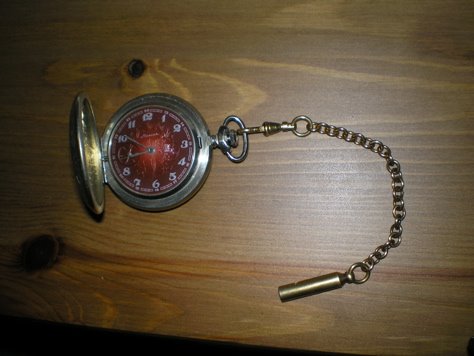
On an old fashioned watch fob :)


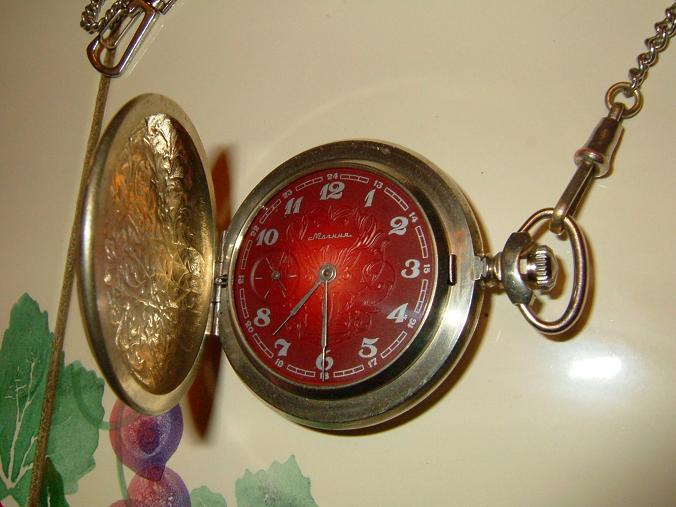
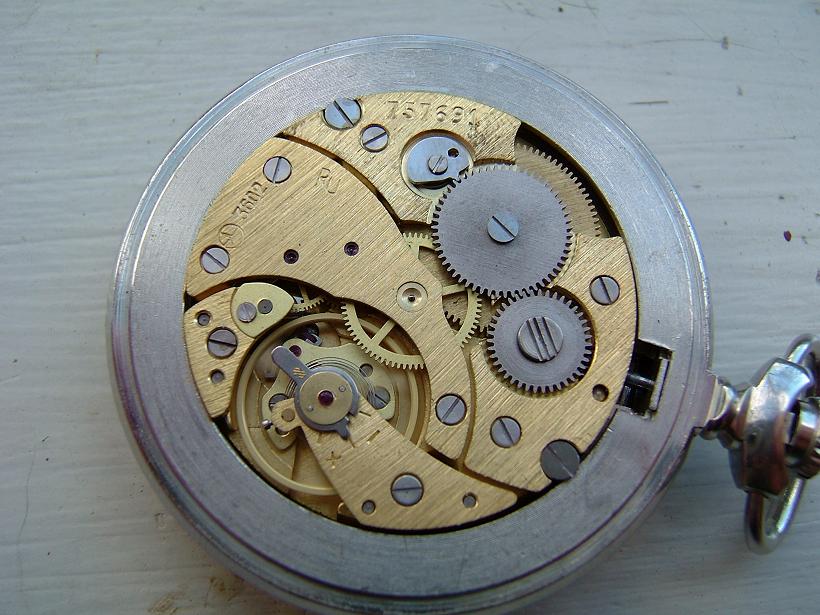
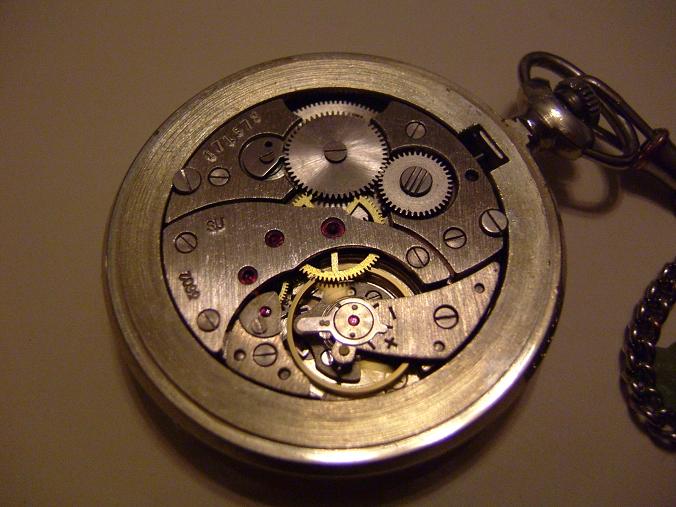
Yet another Molnija. This one is new old stock from the late eighties. Below you can see the movement which appears more nicely made than the current version.
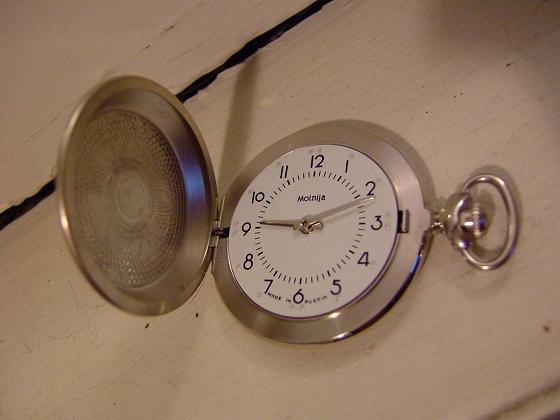
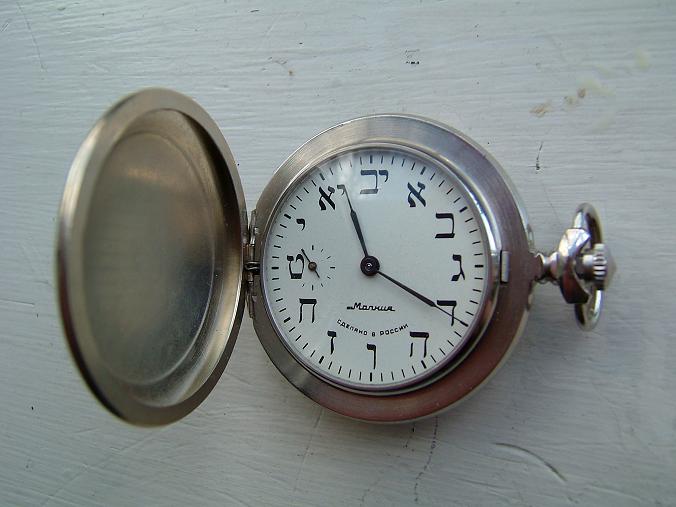
The Braille model on its belt chain
Braille Model


I wasn't planning to write this review. It isn't that I don't like the Molnija pocket watch, quite the contrary actually, I like it a lot. It is simply that I appreciate that pocket watches are just not that popular these days.

There was a time, not all that long ago really, when a pocket watch was considered an essential accessory for any gentleman. Wristwatches, by contrast, were considered somewhat dainty or effeminate when they were introduced and did not gain much market acceptance early on (for more on the emergence of wristwatches, see this article). This would, of course, change as we all know but there still remains a small market for pocket watches. What really prompted me to review the Molnija, however, was sort of a sense of historical irony that developed when I began to do some research into the history of Molnija and, in particular, its movement.

A little background first. The Molnija Clock and Watch Factory was founded in 1947 in the Russian city of Chelyabinsk. The name Molnija, I have read, means lightning. While the factory initially produced a combination of wristwatches, pocket watches, desk clocks and clocks for tanks and other military equipment, from the late 1950's to the present day their main products have been pocket watches. It is said that eighty percent of the manufacturing of these watches is done by hand and that the factory produces all of the parts involved entirely by itself, except for the jewels used in the mechanism. (It is not uncommon for watch manufacturers to subcontract to third parties a large portion of the parts that go into a watch these days) Molnija produces such an amazing variety of case styles and faces that I would find it hard to accept that someone could not find one they liked. The model being reviewed here is from their Religions collection.

Update-The top shots are new. The white faced model is a Braille Molnija. Notice the lack of the subdial and crystal to allow for a person to touch the hands of the watch. The watch hands, by the way, are reinforced to keep them from being deformed in normal use. Otherwise, it is very much like the other Molnija models. The other one with the red face is a new old stock (NOS) model from the late eighties that I found at the back of the counter at a local jewelery store. Odd thing is that I have been walking past this store for years and only just wandered in a few days ago. The owner had a nice assortment of mechanical watches including some Russian ones. Turns out the he was from Uzbekistan and brought the watches with him when he came to the U.S. One other thing. A good chain or fob is essential if you plan to carry a pocket watch. It will keep you from droping the watch when using it. After looking around for a while, I found an ebay seller, Paternosterny, who makes his own chains and fobs. His prices are very reasonable and the quality of his work appears exceptional. The top shot shows one of his whistle watch fobs.

Externally, the Molnija case measures forty-eight millimeters in diameter, not including the crown, and fourteen millimeters in thickness. The case appears to be built from chrome plated steel (I have encountered some claims that it is German silver. It could be true but I have no way of verifying it.) and has a spring-loaded cover over the crystal that is opened by pressing in the crown. The face of the watch has a subdial that measures seconds and both the back of the watch and the crystal are easilly removable. (The crystal is mounted in a chrome plated metal bezel that can be removed as a unit with a watch knife or similar tool. This is a useful feature to remove any dust that may have gotten on to the watch face.) The watch has no lume and is clearly not water resistant.

The Molnija is powered by a model 3602 movement, an 18 jewel hand-wound mechanical mechanism. Rated accuracy is nothing to write home about at -20 to +50 seconds a day although my example does considerably better coming in at approximately +20 seconds daily with good consistency. The movement does not hack for those of you who value that feature. What I personally found very interesting is that the 3602 movement is actually a copy of a Swiss Cortebert pocket watch movement that was originally made at least sixty years ago. While I am not sure exactly which of the old Cortebert movements the 3602 is based on, it bears strong visual resemblance to the model 592 and 620 Cortebert movements. Maybe its just me but find it interesting to consider that a twenty-first century Russian factory is still producing new mechanical pocket watches whose movement dates from the first half of the last century. While I appreciate that there are many currently produced wristwatch movements that have a long history as well (I occasionally wonder who is still producing the oldest designed movement out there-maybe the huge Zlatoust Diver watch that this one is in a pocket watch makes it even more of a curiosity in my mind. Every time I wind it up, set it, and clip its chain to my belt, it occurs to me that prior to World War I, everyone who had a watch did the same ritual every day. (Yeah I know, I'm a little odd) As an aside, a slightly modified version of this movement, the 3603, with better shock protection is used in a number of Poljot and Junkers (German) wristwatches.

The obvious question when it comes to a pocket watch these days is, of course, why bother? My answer is simply this...why not. It keeps time well enough, you won't see everyone else out there with one and it looks nice. To that you can add that, like many Russian watches, the price of admission is not high at all (see this ebay store, or here , there are many others too). Would I necessarilly carry my Molnija every day, probably not (not that it wouldn't work well in that role). But as for an occasional change of pace, and for those times when a wristwatch is a bad idea I think the Molnija is a terrific choice. (I play golf pretty regularly and, with the exception of Tag Heuer's newly released Tiger Woods golf watch which would set me back a fair amount, wearing a wristwatch is not a good idea. The vibrations from the swing would damage the watch and the weight on the wrist is annoying. I haven't thought about it much but there are probably other times when a wristwatch wouldn't work too. Maybe when operating machine tools and the like?) In the final analysis though, if you want to own a small piece of history and you like watches, (you probably wouldn't have read this far if you didn't) give a Molnija a try. They are inexpensive, nicely made and a decidedly different and old world way to measure the passage of time.

The Pobeda Posted by Hello